Discover stories from the field, expert advice, and travel inspiration across Latin America.
Tips for Wildlife Photography in the Pantanal
Juliana Coin | 04/27/2026
Your journey to the Pantanal will be filled with memorable encounters with the most extraordinary animals of the Brazilian wilderness.
To ensure that the memory of the vast array of impressive species you will encounter does not fade with time, there is no better way than capturing the most spectacular photographs.
To photograph life within this biome is to allow the observed colors and movements to become a permanent part of your story. The natural landscapes will serve as frames, portraying the dialogue between your gaze and the sovereign nature of the region.
In this article, you will discover tips that will help you capture perfect moments during your journey through the Pantanal.
Knowledge of the Destination and Your Equipment
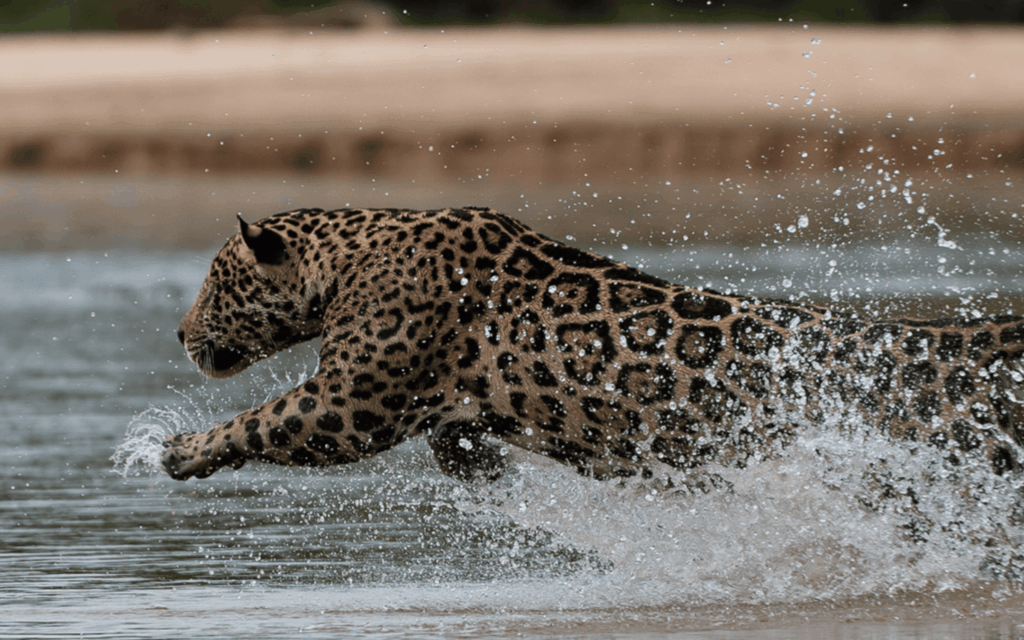
One of the fundamental factors for those planning to photograph the nature of the Pantanal is a deep understanding of the destination and the local wildlife. Comprehending the behavior of the jaguar, the rhythm of the waters, and other details of the flora and fauna allows your creativity to flourish in every shot taken.
Furthermore, it is essential to have mastery over the equipment chosen for the journey. Therefore, this article serves as a guide of suggestions — remembering that nothing replaces your own familiarity with your camera.
Ricardo Casarin/South Quest
Equipment for Sharpness and Reach
When traveling with South Quest, you will be accompanied by specialized guides who will help you better understand the habits and routines of the local wildlife. One of the fundamental guidelines is respect for the ecosystem: it is imperative to establish and respect proximity limits with wild animals.
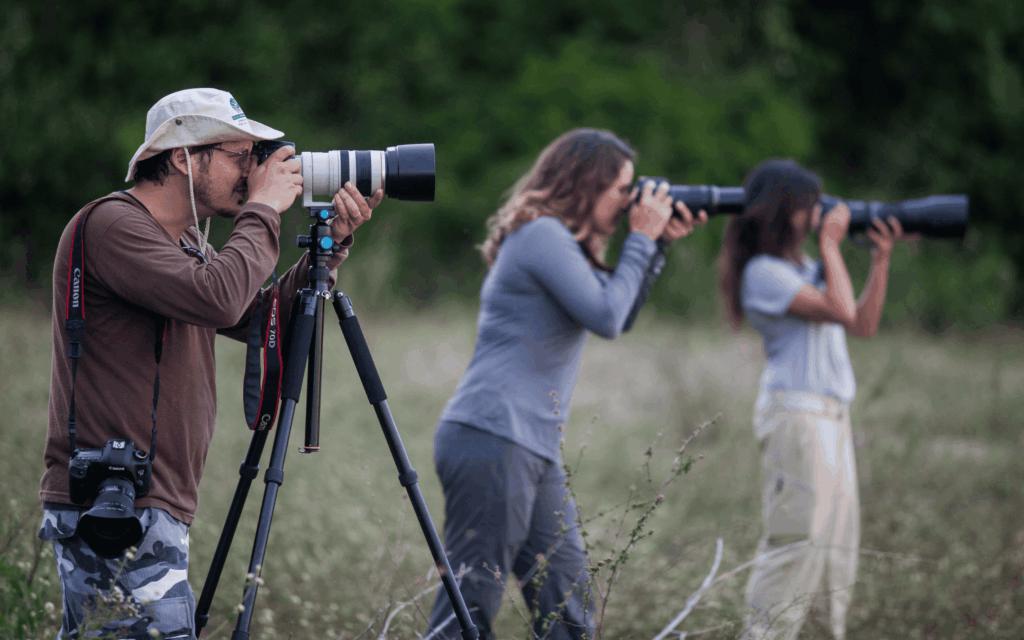
For this reason, we recommend the use of telephoto lenses with a range of 400 mm to 600 mm. This equipment, capable of precisely recording details situated at great distances, will allow you to capture sharp images of any animal while maintaining the necessary distance.
Due to the weight and size of these lenses, the use of a monopod is also recommended. This will assist in stabilizing the equipment, ensuring the clarity of every photograph.
Settings to Capture Instinct
When you’re documenting wild animals, it is important to consider the unpredictability of what will be observed. Animals don’t pose for photos, and it is precisely this characteristic that makes wildlife photography one of the most fascinating modalities.
For this reason, it is fundamental that the traveling photographer remains agile and utilizes a configuration that supports this dynamism.
One of our recommendations for recording dynamic action is: a shutter speed above 1/1600s, balanced with an ISO between 400 and 800. This combination is essential to preserve the texturewithout generating noise.
Composition and the Observer’s Eye
As previously explained, wildlife photography is unpredictable. For this reason, it is important to keep in mind that not everything will happen at the expected moment.
In this sense, patience can be a great ally in your composition and in the recording of the animals you will encounter. The rule of thirds can help you create engaging visual narratives and position points of interest during sightings.
Your Expedition with Exclusive Curatorship
South Quest values the time of the contemporary traveler. We design expeditions that unite technical rigor and sophistication. Our specialized guides possess a profound knowledge of jaguar behavior.
We offer comfort and security for travelers interested in recording every stage of their journey. Contact us to plan your bespoke photographic journey in the Pantanal!