Discover stories from the field, expert advice, and travel inspiration across Latin America.
Meet the Fascinating Giant Anteater
Juliana Coin | 03/23/2026
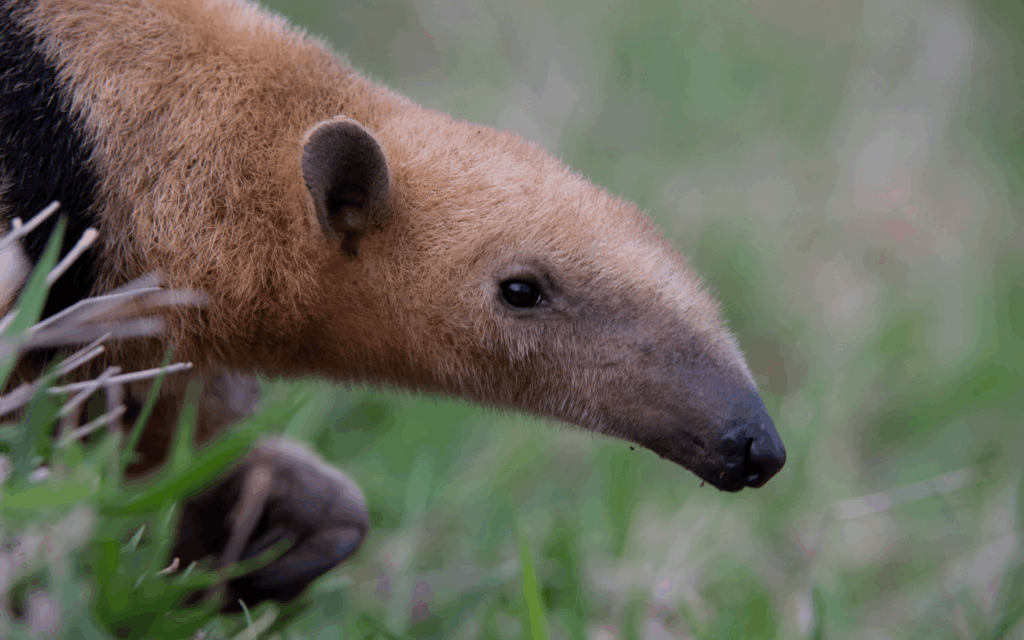
Among trees and flowers, across flooded plains and dry lands, a majestic creature hides. Are you familiar with the Giant Anteater?
If you seek a profound immersion into the wildlife of the Pantanal, understanding this animal is essential to falling in love with this destination even more.
A Biome Demanding Preservation
The Pantanal is a sanctuary of biodiversity. The composition of this ecosystem ensures the survival of diverse wildlife, including the Giant Anteater (Myrmecophaga tridactyla).
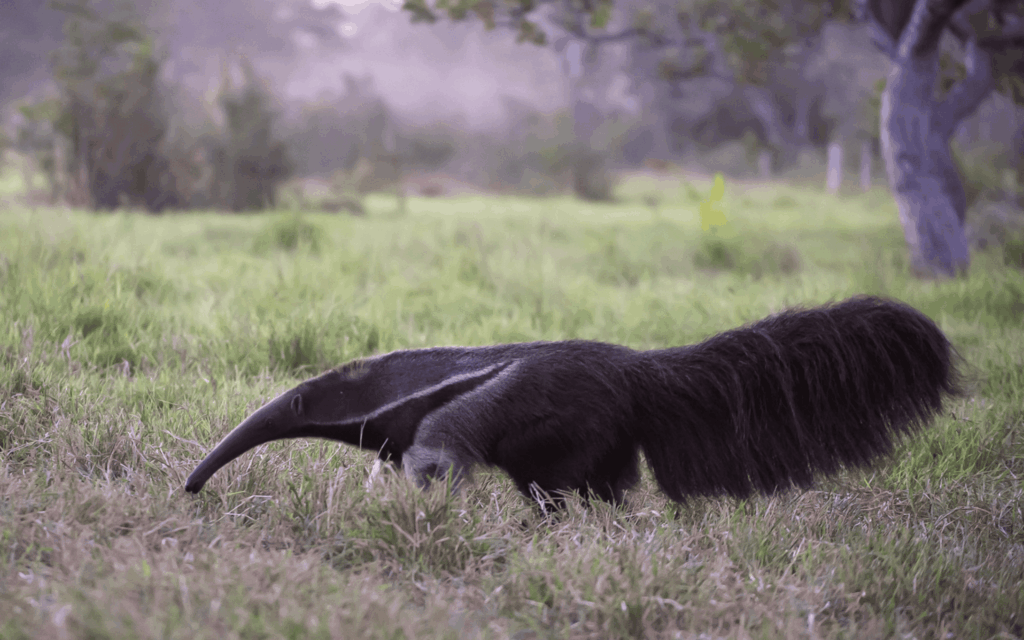
This mammal can reach an impressive 7.8 feet (2.4 meters) in length. Its role in the local ecological balance is vital: it controls insect populations, serving as a fundamental link in the food chain. Furthermore, it is a crucial indicator of the region’s environmental quality and an icon of biome resilience.
Now more than ever, the Giant Anteater must be protected. Its species is classified as “vulnerable,” facing the risk of extinction.
Ricardo Casarin/South Quest
The Behavior of the Giant Anteater
During your journey through the Pantanal, it is important to remain attentive to any movement. The Giant Anteater is active during twilight and throughout the night. To navigate the Pantanal darkness, it relies on its sense of smell — which is 40 times more powerful than a human’s — to detect insect colonies.
Have you ever wondered how such a large animal manages to feed on insects, like ants and termites, tucked away inside their colonies? The answer is simple: nature bestowed this mammal with a tongue that can reach up to 24 inches (60 centimeters).
But don’t worry about the insects. Despite being capable of capturing up to 35,000 specimens a day, the anteater never destroys the nests during feeding. In this way, other insects can return to inhabit the established structure.
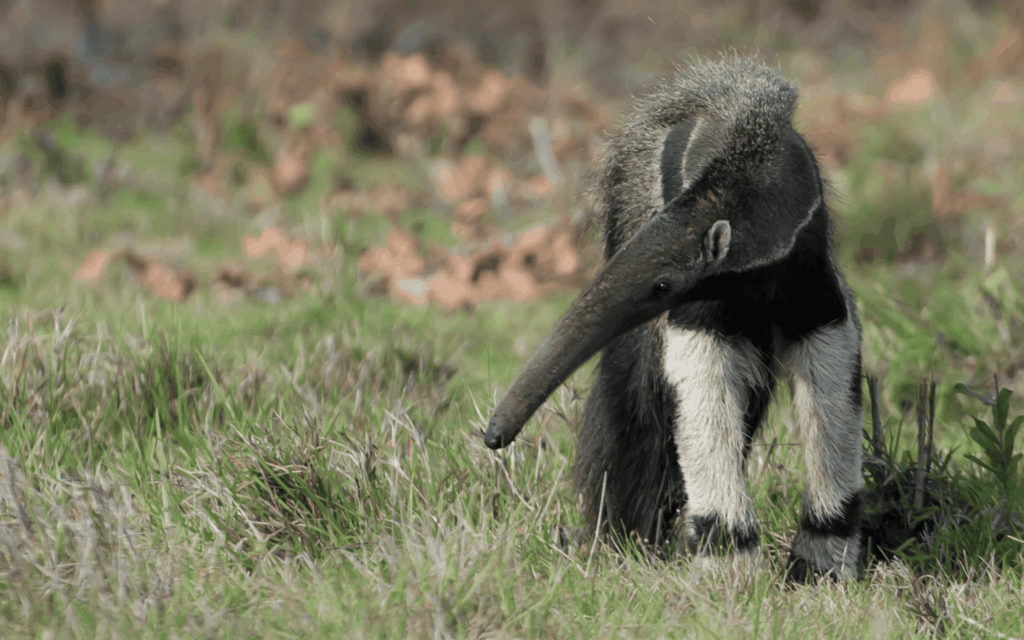
The Giant Anteater possesses a peaceful nature, demonstrating strength only when it feels cornered. In these moments, it rises onto its hind legs, standing “upright” like a human. Even large predators can be startled when this mammal displays its four-inch (ten-centimeter) claws.
For these and other reasons, it is always fundamental that travelers destined for the Pantanal be led by local specialists. They not only know how to locate wild animals but can also describe their behaviors and the necessary precautions when encountering them.
Ricardo Casarin/South Quest
Venture Forth with South Quest
South Quest designs luxury itineraries connected to the very essence of the Pantanal. We unite sophistication and responsibility in our travels, providing specialized guides throughout the entire expedition.
We guarantee private transportation and a focus on minimal environmental impact. Our mission is to protect the fauna and the habitat of the Giant Anteater. Contact us to plan your personalized adventure to the Pantanal!
Sources: SOS Pantanal, National Geographic Brazil, and others.